Five of Swords Tarot Card Meaning
Upright & reversed, love, and yes-or-no — the full picture.
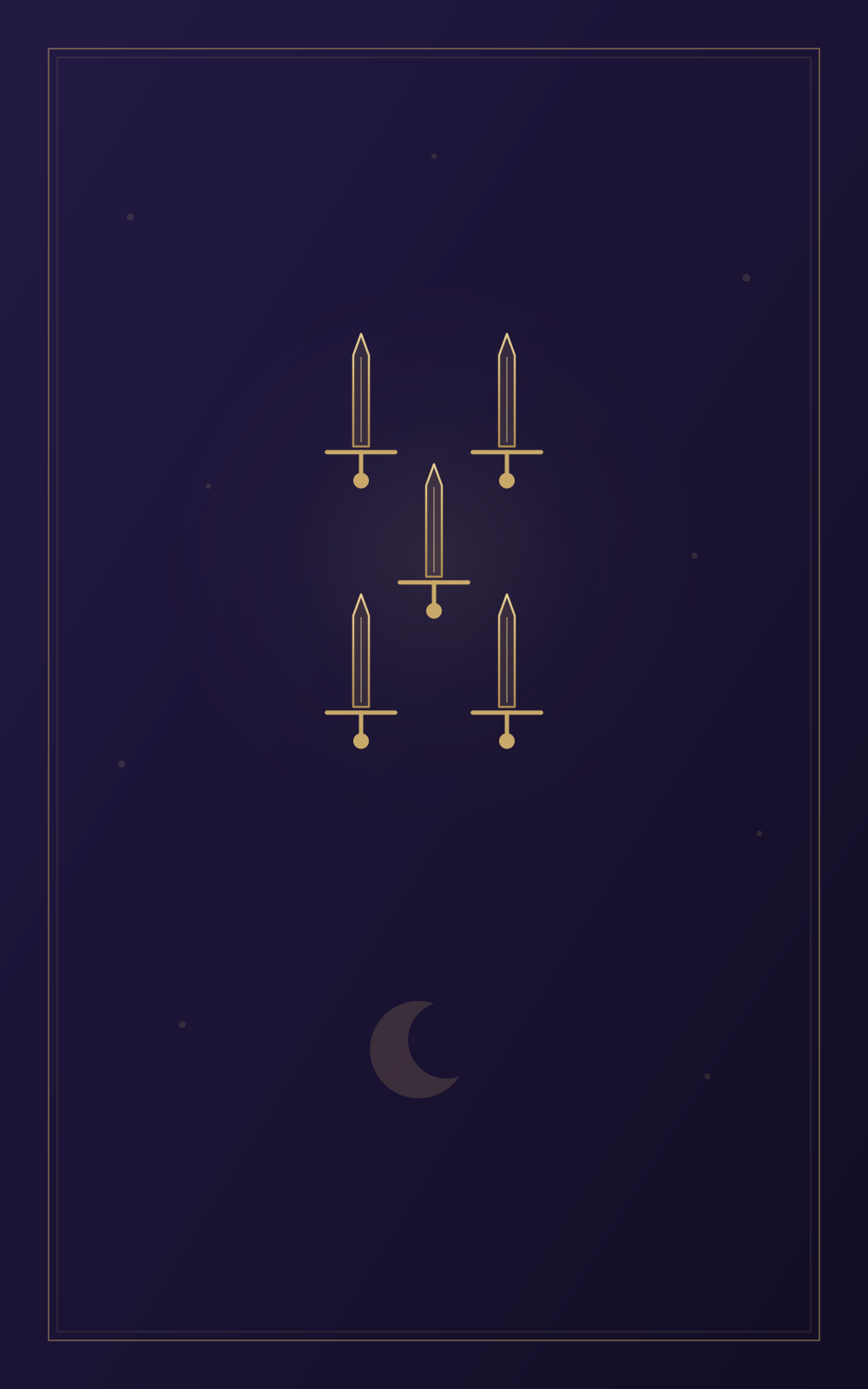
Under a sky of ragged, wind-torn clouds, a man with a sly backward glance gathers three swords into his arms while two more lie abandoned at his feet; in the distance, two figures walk away toward the water, one with his face in his hands. The Five of Swords is the suit's portrait of conflict that nobody really wins. Someone in this scene got what they wanted, and the price was the field itself: trust, goodwill, the relationship, the team. If you identify with the collector of swords, the card questions your victory; being right at any cost tends to leave you alone with your armful of metal. If you identify with the departing figures, it validates the retreat; some fights degrade everyone who stays in them, and walking away is not the same as losing. The jagged clouds mirror a peace that is only weather between storms. It puts a hard question to you: weigh what any win here actually costs, and to consider whether the most intelligent move on this battlefield is to leave it.
Reversed, the victor's smirk fades as he looks at the swords in his arms and wonders why he wanted them; the aftermath has arrived, and the cost of the conflict is finally being counted. This is the card of the apology drafted and deleted, the feud whose original cause nobody can state, the win that has been quietly poisoning its winner. At best, the reversal opens a door the upright card slammed: pride softens, someone reaches out, weapons get surrendered rather than gathered, and a slow reconciliation begins. At worst, it shows resentment going underground, hostilities continuing by other means, sarcasm and cold silence replacing open argument. Which version unfolds depends largely on whether anyone is willing to lose a little face. The two walkers by the shore suggest that distance has given perspective; use it. Its counsel: release the grievance while it can still be released cheaply, because old feuds compound like debt, and to make any amends specific rather than vague.
In love this scene is bruising: the smirking figure clutching swords while another walks off head-in-hands maps onto arguments where winning replaced understanding. Someone is keeping score. The torn clouds overhead warn that a relationship can be technically won and actually lost, so drop the tally before it drops you both.
Reversed, the abandoned swords on the ground become the hopeful detail: weapons nobody picks up again. In love it points to cooling tempers after a bad stretch, an apology trying to find its wording, or the decision to end a feud with an ex. Let remorse become repair, not another round.
One card, one clear answer — and the reason behind it.
Am I the winner or the loser in the Five of Swords?
−Is the Five of Swords a yes or no card?
+What should I do about the conflict this card describes?
+Tarot readings on Arcavoya are for reflection and entertainment — not a substitute for professional medical, legal, or financial advice.