Six of Swords Tarot Card Meaning
Upright & reversed, love, and yes-or-no — the full picture.
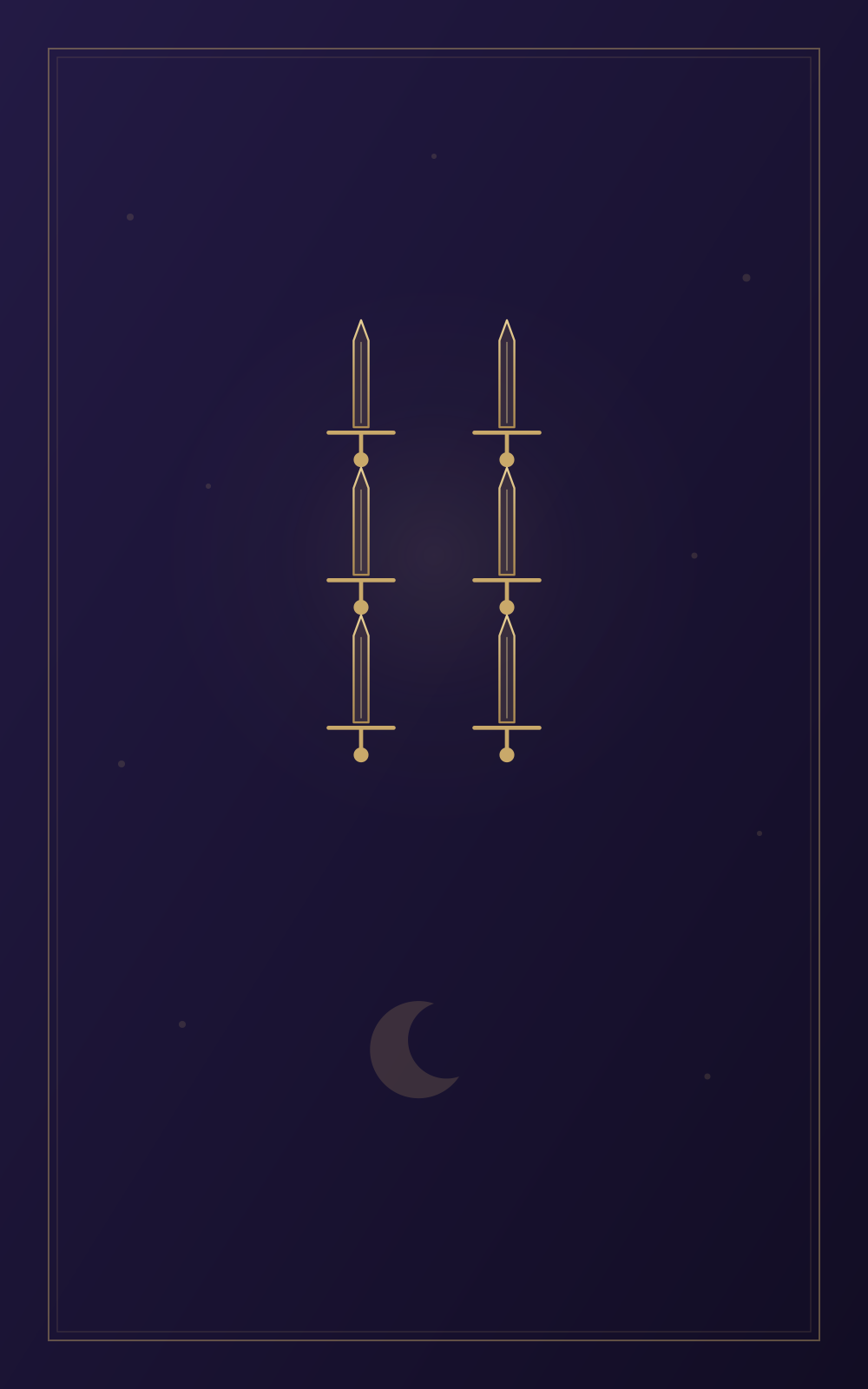
A ferryman poles a small boat across grey water, carrying a cloaked woman and a child; six swords stand upright in the bow, and the water on the far side of the hull lies smooth while the near side is choppy. The Six of Swords is the quietest card of change in the deck. Nothing dramatic happens in the image, and that is its truth: some departures are not slammed doors but low boats slipping away at dawn. It marks a passage out of difficulty, a move, an ending accepted, a mind gradually leaving an old way of thinking. The swords travel in the boat because what you have learned, and even what has hurt you, comes along; the point is not amnesia but distance. The passengers' hunched shoulders admit that this crossing carries grief. Yet the far shore is drawn plainly, reachable, real. The card asks you to keep poling, to accept help ferrying what you cannot carry alone, and to trust that calmer water is not a fantasy but a place.
Reversed, the boat turns back toward the rough water, or never leaves the dock at all; the transition the upright card promises is being resisted, delayed, or quietly sabotaged. You may be clinging to a situation you have already outgrown because its misery is at least familiar, or making a needed departure in every way except actually going. Sometimes the reversal shows a return forced by unfinished business: a conversation left incomplete, paperwork unsigned, a goodbye that has to be said properly before the crossing will take. The six blades standing in the bow become the problem here, freight so heavy the hull rides low, old grievances and old identities packed as if the far shore required them. Nobody ferries you against your will. The card asks you to identify precisely what keeps pulling you back, settle what genuinely needs settling, then jettison the rest, because a passage postponed indefinitely stops being a passage and becomes a residence in the middle of the water.
The huddled woman and child in the ferry speak to love in transition: leaving a painful chapter, relocating for a relationship, or a couple rowing together away from a rough season. The smooth water ahead of the bow promises calm earned gradually. Someone steadies the pole; let yourself be helped.
Reversed, the boat circles back into chop, and in love this looks like returning to an ex out of familiarity, stalling a departure everyone knows is coming, or dragging old-relationship swords into a new one. Finish the unfinished conversation honestly, then let the crossing finally happen.
One card, one clear answer — and the reason behind it.
Does the Six of Swords mean I should move or travel?
−Is the Six of Swords a positive card?
+Why do the swords stand upright in the boat?
+Tarot readings on Arcavoya are for reflection and entertainment — not a substitute for professional medical, legal, or financial advice.